
What is hBN?
Hexagonal Boron Nitride (hBN)
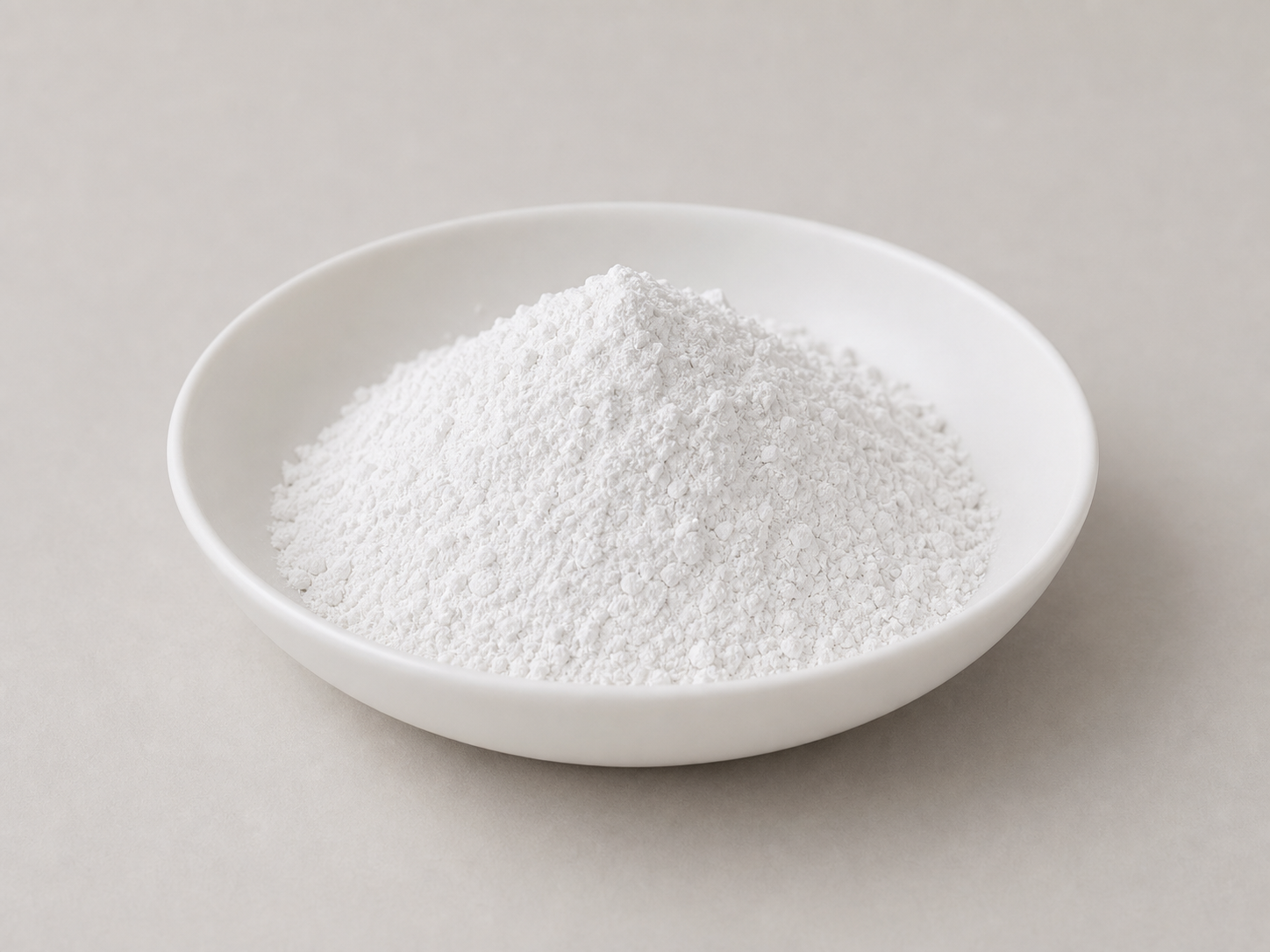
Aurexene Materials hBN is a family of thermally conductive, electrically insulating platelet powders for thermal fillers and TIMs, epoxy molding compounds, underfills, encapsulants, and HBM package heat paths.
Technical owner: Aurexene Materials Engineering Team · Last updated: 2026-08-30
What It Is Not
- hBN is hexagonal boron nitride, not cubic boron nitride and not an electrically conductive carbon analogue of graphite.
- A standard hBN powder grade is not a ready-to-use liquid coolant; liquid-loop hBN nanofluids are separately formulated and qualified dispersions.
When Not to Use It
- Do not use hBN when the material must form an electrically conductive pathway or when high ceramic loading and platelet orientation cannot be accommodated.
Intrinsic Screening Summary
- Identity screen
- BN; Platelet
Application Fit
Selection & Validation Framework
| Decision Question | Material-Level Answer |
|---|---|
| Integration and processing criteria | Required for: Heat Dissipation. Measure: particle distribution; settling; redispersion; storage stability; moisture exposure. Sample state: final host formulation or part state. Failure signals: Thermal path remains discontinuous or interface resistance dominates measured heat flow.. |
Material Identity & Specification Status
Approved values for Packaging are not published; confirm them during quotation or sample review.
| Property | Value |
|---|---|
| Composition | BN |
| CAS / identity | 10043-11-5 |
| Particle size | Grade-specific D50 from <1.0 to 30.4 µm for powder grades |
| Morphology | Platelet |
| Density | Grade-specific; powder loose density is 0.36 to 0.82 g/cm3 |
| Purity | Standard powder grades are 99.0 to 99.2% BN; customizable 99.9% and 99.99% purity grades are available on request |
| Storage | Store sealed in a dry, clean area away from moisture and contamination |
Compare Material Routes
Material Evidence
Technical Guides
| Technical Guide | Summary |
|---|---|
| Bond-Line Thickness, Contact Pressure, and Surface Roughness in Thermal Interfaces | An assembly-level method for separating bulk-layer resistance from two contact interfaces while controlling bond-line thickness, pressure, surface topography, coverage, aging, and mechanical retention. |
| Controlling Voids and Porosity in Thermal Adhesives, Encapsulants, Pads, and Composites | A defect-control method that distinguishes air, moisture, volatiles, wetting, cure, delivery, and assembly causes, then verifies void location and finished thermal-interface response. |
| Hybrid hBN, AlN, and Insulating-Filler Networks for Higher Thermal Transport | Hybrid Hexagonal Boron Nitride (hBN), AlN, and Insulating-Filler Networks for Higher Thermal Transport — a method-conditioned engineering guide for Thermally Conductive & Electrically Insulating Polymers covering structure-function behavior at the material, interface, and finished-system boundary, process limits, validation, and qualification boundaries. |
FAQ
Why does hBN work for thermal conductivity and heat dissipation?
Hexagonal BN provides a platelet heat-conduction route through a host while remaining electrically insulating; interface resistance, orientation, loading, and dispersion determine the result.
Is hBN used for electrical insulation or thermal conductivity?
Both properties are the reason it is selected: hBN can move heat without creating the electrically conductive carbon network associated with carbon fillers.
What must be validated before using hBN for thermal conductivity?
Validate particle distribution, wetting, platelet orientation, thermal interface resistance, loading, viscosity, polymer compatibility, and thermal cycling in the final host.
How does hBN fit epoxy molding compounds and semiconductor packaging?
hBN can serve as an electrically insulating ceramic filler in thermally conductive epoxy molding compounds, underfills, encapsulants, prepregs, and TIM layers. The finished package still requires thermal, dielectric, moisture, cure, adhesion, CTE, and warpage qualification.
Can hBN be used in HBM liquid-cooling systems?
Distinguish the role. hBN is relevant in solid package heat paths that move heat from HBM toward a liquid-cooled cold plate. Experimental hBN-water nanofluids have also been studied in computer cooling loops, but they are separate formulations requiring fluid stability, pumping, clogging or erosion, dielectric, and materials-compatibility qualification.
Commercial Availability
Supplier role: Request confirmation
Supply status: Request confirmation
Sample status: Sample availability requires confirmation
Commercial details are not published until the source and verification fields are complete and the Supplier Data Packet is signed by the sales owner, technical reviewer, and resource/compliance owner. Request current grade, form, sample, packaging, and delivery confirmation.
Documents & Inquiry
Document access follows the current approval state. Unapproved or unavailable files route to a document request instead of a public download.
Technical Data Sheet
Approval required
Safety Data Sheet
Approval required
Grade, Sample & Qualification Support
The Aurexene Materials Engineering Team can review the required form, host system, formulation or process, target, sample quantity, volume and timeline, and the grade-specific evidence needed before qualification.
Review Lab Capabilities for sample evaluation and qualification support, or Production Capabilities for scale-up, quality, documentation, and supply support.
Request hBN Sample / Qualification Review