
Application
Varistor & Functional Ceramic Sensors
Decision guide for bismuth-oxide, Calcium Copper Titanate (CCTO), and phase-confirmed lanthanum titanate routes in dielectric, varistor, piezoelectric, and sensor ceramics.
Quick Answer
Use CCTO for high-permittivity dielectric studies and Bismuth Oxide or Alpha Bismuth Oxide as process or functional oxide routes only when composition, phase, sintering, grain-boundary chemistry, electrodes, leakage, and reliability are qualified; Ca-Doped Bismuth Oxide remains application-specific.
What Are Varistor & Functional Ceramic Sensors?
Electronic ceramic systems must convert controlled composition, phase, particle state, forming, sintering, electrodes, and microstructure into stable dielectric, varistor, piezoelectric, ionic, or sensor behavior.
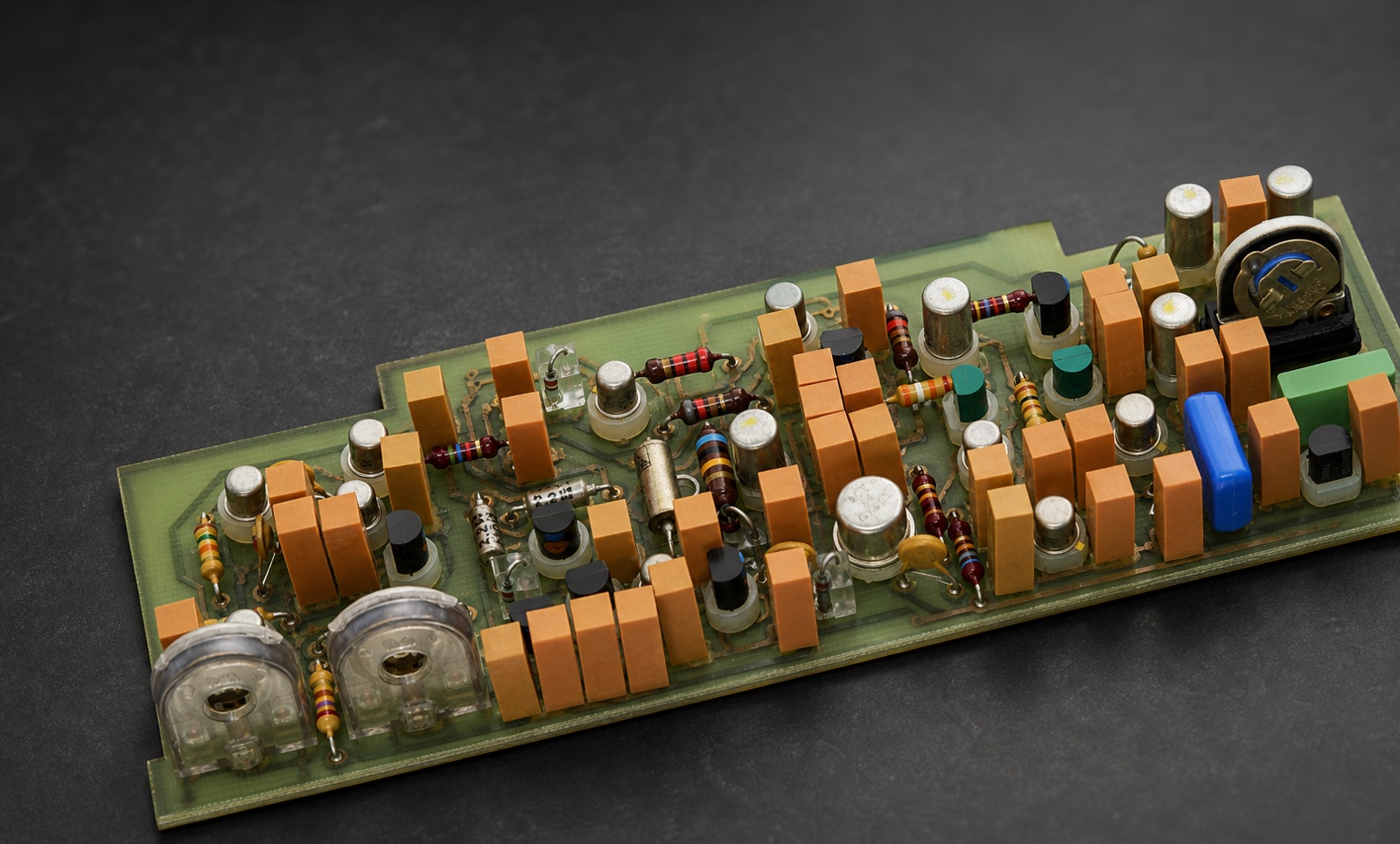
Mechanism
Establish microstructure and electrical response through controlled composition, phase, processing, electrodes, and service conditions.
The mechanism depends on the following system interfaces:
- base ceramic, dopants, impurities, particle size, milling, binder, and forming
- debinding, atmosphere, sintering profile, volatilization, grain boundaries, porosity, and dimensions
- electrode chemistry, firing, contact, package, frequency, field, gas, humidity, and temperature
Material Selection
Read each row as a scenario-specific route: the guidance explains why a material fits, while the rejection boundary shows when to stop screening it.
| Scenario | Materials | Guidance |
|---|---|---|
| High-permittivity dielectric ceramic study | CCTO | Use CCTO only with frequency-, temperature-, field-, loss-, leakage-, microstructure-, and electrode-specific validation. |
| Bismuth-oxide additive or ceramic process route | Bismuth Oxide / Alpha Bismuth Oxide | Compare when bismuth chemistry supports the exact ceramic formulation, sintering, grain-boundary, dielectric, varistor, piezoelectric, or sensor objective. |
| Doped bismuth-oxide functional ceramic | Ca-Doped Bismuth Oxide | Keep application-specific until phase, composition, ionic or electrical response, sintering, stability, and device evidence are approved. |
| Phase-confirmed lanthanum titanate study | Lanthanum Titanate | Separate LaTiO3 from La2Ti2O7 before selecting the processing, electrical, dielectric, or ferroelectric qualification route. |
Scope Boundary
- This is not one ceramic device or one powder family; capacitor, varistor, piezoelectric, and sensor functions require different compositions and fired structures.
- Do not use this page as a finished-device specification; powder identity does not establish capacitor, varistor, piezoelectric, or sensor performance after forming, firing, and electrode integration.
Scenarios and Subtypes
Use the host-system or subtype constraint to narrow the material direction before comparing grades or supplier data.
| Scenario | Key constraint | Material direction |
|---|---|---|
| Dielectric and capacitor ceramics | Permittivity, loss, leakage, breakdown, frequency, temperature, field, electrodes, and aging. | CCTO or qualified bismuth-oxide-containing formulation. |
| Varistor and nonlinear ceramics | Nonlinear response, leakage, surge, grain boundaries, phase distribution, electrodes, and life. | Bismuth Oxide or Alpha Bismuth Oxide only in a validated base ceramic. |
| Functional oxide sensors | Phase, conductivity or impedance, target response, selectivity, atmosphere, humidity, electrodes, porosity, and drift. | Bismuth-oxide or Ca-Doped Bismuth Oxide route after direct sensor evidence. |
Target Performance Bands
Interpret each target together with its stated unit, condition, geometry, and validation method; no single value selects a material route by itself.
| Metric | Target range | Unit | Condition | Required |
|---|---|---|---|---|
| Electrical function | Customer-defined dielectric, varistor, ionic, or sensor response with variability limits. | εr, tan δ, A/cm², V/mm, α coefficient, S/cm, ohm, or response % | Final component, electrodes, frequency, field, temperature, atmosphere, and aging. | yes |
| Ceramic process and reliability | Phase, density, microstructure, dimensions, yield, and life remain inside acceptance. | process- and qualification-specific | Production powder preparation, forming, firing, finishing, and assembly. | yes |
Failure Modes
Use failure rows to identify a measurable trigger and the corresponding design response.
| Failure type | Root cause | Manifestation | Mitigation strategy |
|---|---|---|---|
| Electrical response is high but unusable | Apparent material response does not translate into an acceptable device operating window. | High loss, leakage, heating, dispersion, bias sensitivity, or wide component variability. | Rework composition, phase, microstructure, sintering, electrodes, geometry, and operating range. |
| Sintering or phase control fails | Powder preparation and thermal process do not reproduce the required phase and microstructure. | Density or shrinkage scatter, abnormal grains, porosity, secondary phases, cracks, or color variation. | Tighten raw materials, milling, binder, forming, atmosphere, firing, cooling, and analytical controls. |
| Device drifts or fails during life testing | The ceramic-electrode-package system lacks long-term chemical or electrical stability. | Leakage rise, capacitance or impedance drift, varistor degradation, sensor baseline drift, cracks, or electrode loss. | Change composition, phase, sintering, electrodes, barriers, package, or operating limits. |
Validation Data Requested
| Measurement requested |
|---|
| Composition, impurities, particle size, phase, surface area, moisture, milling, and batch consistency. |
| Forming, binder, debinding, atmosphere, firing profile, shrinkage, density, porosity, grain size, and secondary phases. |
| Permittivity, loss, leakage, breakdown, nonlinearity, conductivity, impedance, or sensor response with full method conditions. |
| Electrode chemistry, co-firing, adhesion, contact, diffusion, reaction, geometry, and package integration. |
| Thermal, humidity, bias, surge, atmosphere, cycling, drift, variability, and life data. |
FAQ
Is CCTO automatically suitable for commercial capacitors because it has high permittivity?
No. Dielectric loss, leakage, frequency, field, temperature, grain boundaries, electrodes, process yield, and reliability determine usefulness.
What role can Bismuth Oxide play in electronic ceramics?
It can be screened as a ceramic additive or functional oxide where composition, phase, sintering, grain boundaries, electrodes, and device data support the use.
Are Alpha, Beta, and Delta Bismuth Oxide interchangeable?
No. Phase identity and stability change processing and function. Use the published Alpha, Beta, or Delta node only when phase identity and retention through the intended firing and service history are evidenced.
Can powder data predict a varistor or sensor?
No. Final formulation, phase, microstructure, electrodes, geometry, atmosphere, method, and aging control device behavior.